Designing a mobile MOBA interface
An HCI case study on how projecting, smart-seeing and close-coupling drive player engagement — and a mobile HUD designed to lower the learning curve without flattening the skill ceiling.
- My role
- Research, gameplay design, interface design
- Team
- Alexandra I, Jalene P, Sapol P
- Timeline
- April 2022
- Studied
- League of Legends, Wild Rift, Brawl Stars, Clash Royale
- Context
- Human-Computer Interaction & Cognition
The three ideas this rests on
Projecting and smart-seeing — using external representations to think more actively, and reading cues to work out how to proceed.
Close-coupling — thinking actively while interacting with a dynamic system and an adaptive environment.
Gamers employ all three constantly. The question was whether an interface could be designed to demand them deliberately.
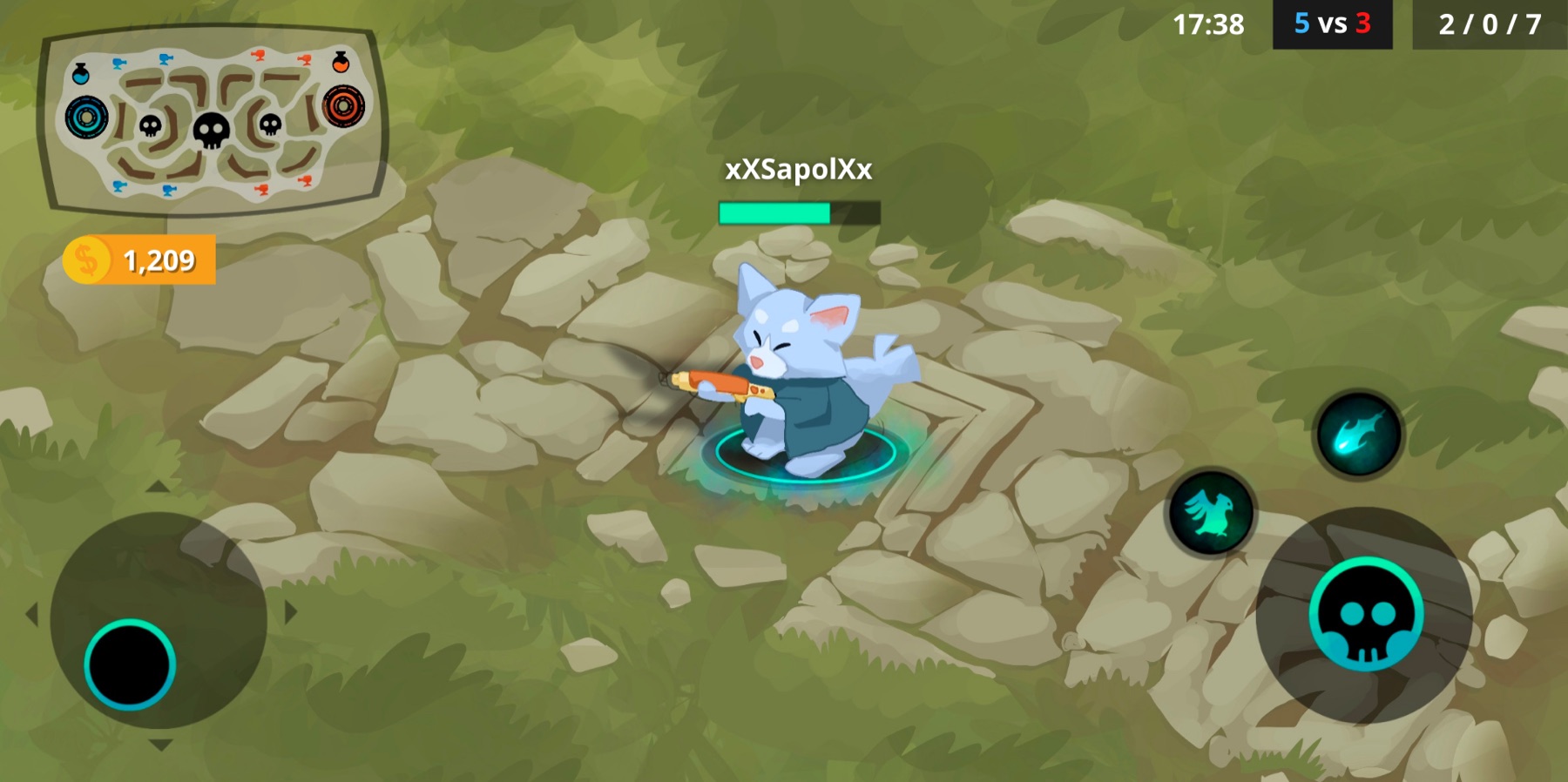
Approach
Design objective
How can we use smart-seeing, projecting, and close-coupling to design a mobile MOBA interface with a simple learning curve, while keeping gameplay complex and rewarding?
Research questions
- MOBAs are character-dependent — is skill at piloting characters more important than overall strategy? (micro vs. macro)
- What currently keeps players engaged through close-coupling?
- Which features hold player attention in MOBA interfaces?
What we found
After playing across League of Legends, Wild Rift, Brawl Stars, and Clash Royale, three patterns held: MOBAs lean on repetitive tasks that dull over time, they offer little varied interaction because players employ so little close-coupling, and early games feel slow to newcomers.
Hypothesis
If more interactive and dynamic external representations are present, players will be more engaged — because close-coupling, smart-seeing, and projecting would actually be required to play well.
The proposal
- A simple, comprehensible UI layout and control scheme
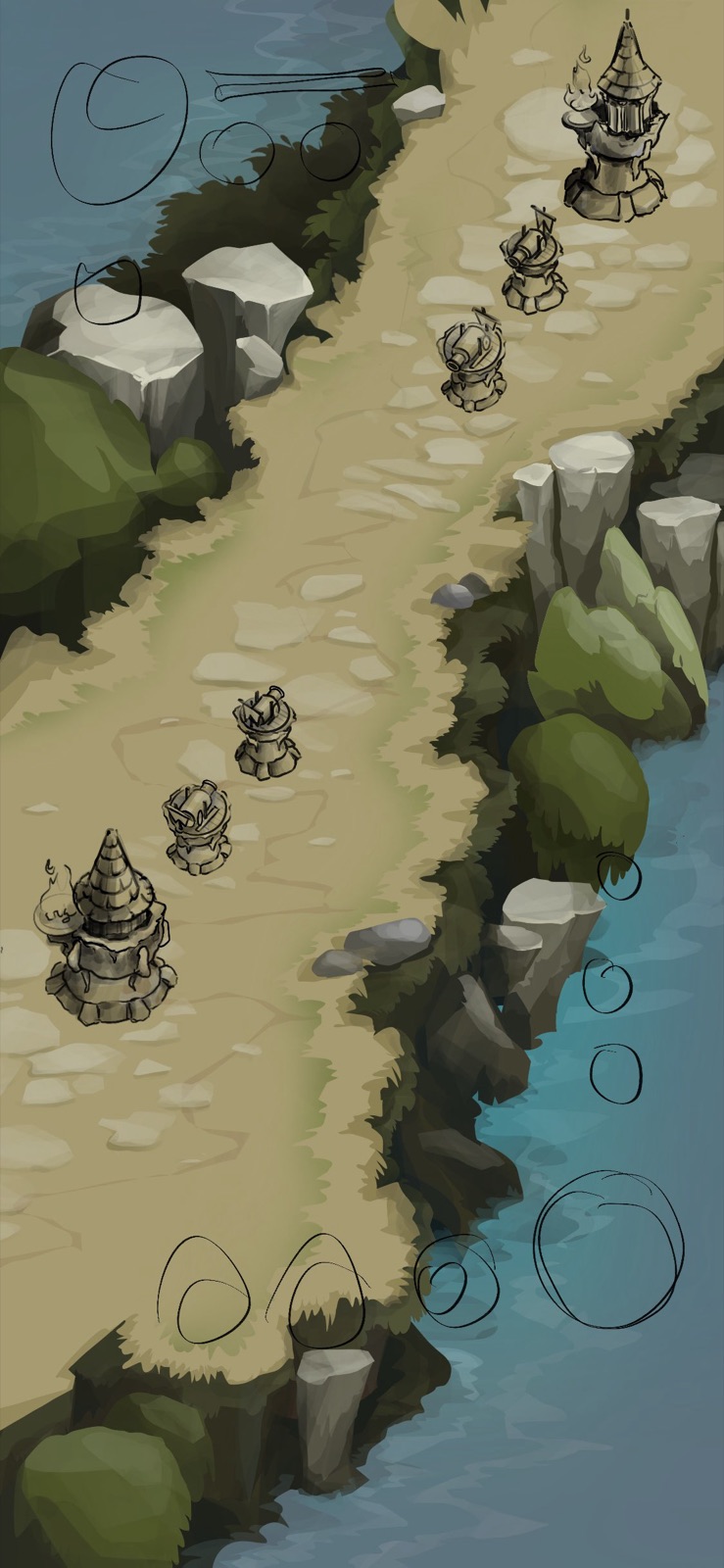
- PvE elements accessible to every player, so the match isn't only a repeating battle setup
- Basic tactical advice surfaced in-game, to give players a sense of learning
- High incentives on high-risk objectives, so both the winning and losing team stay engaged — the golden snitch principle

Findings — honestly, both ways
What it would gain
Matches stay competitive between teams for longer, which encourages players to keep progressing — and leaves room for close-coupling, individual skill expression, and theorycrafting.
What it would cost
The added PvE elements and supplied tactical advice would make early gameplay less competitive, and may hinder players from developing strategies of their own.
What I took from it
The research mostly illustrated how hard it is to build a MOBA for casual players. Cognitive practices help, but skill gaps never disappear — what actually matters is fair matchmaking against players of similar ability. That's a systems answer to what looked like an interface problem.
Our team came at this from very different gaming backgrounds, which is where the useful arguments came from. What stayed with me is distributed cognition as a design tool: most people in online spaces already know how interface navigation works, so consistency across design systems is doing more work than novelty ever does.